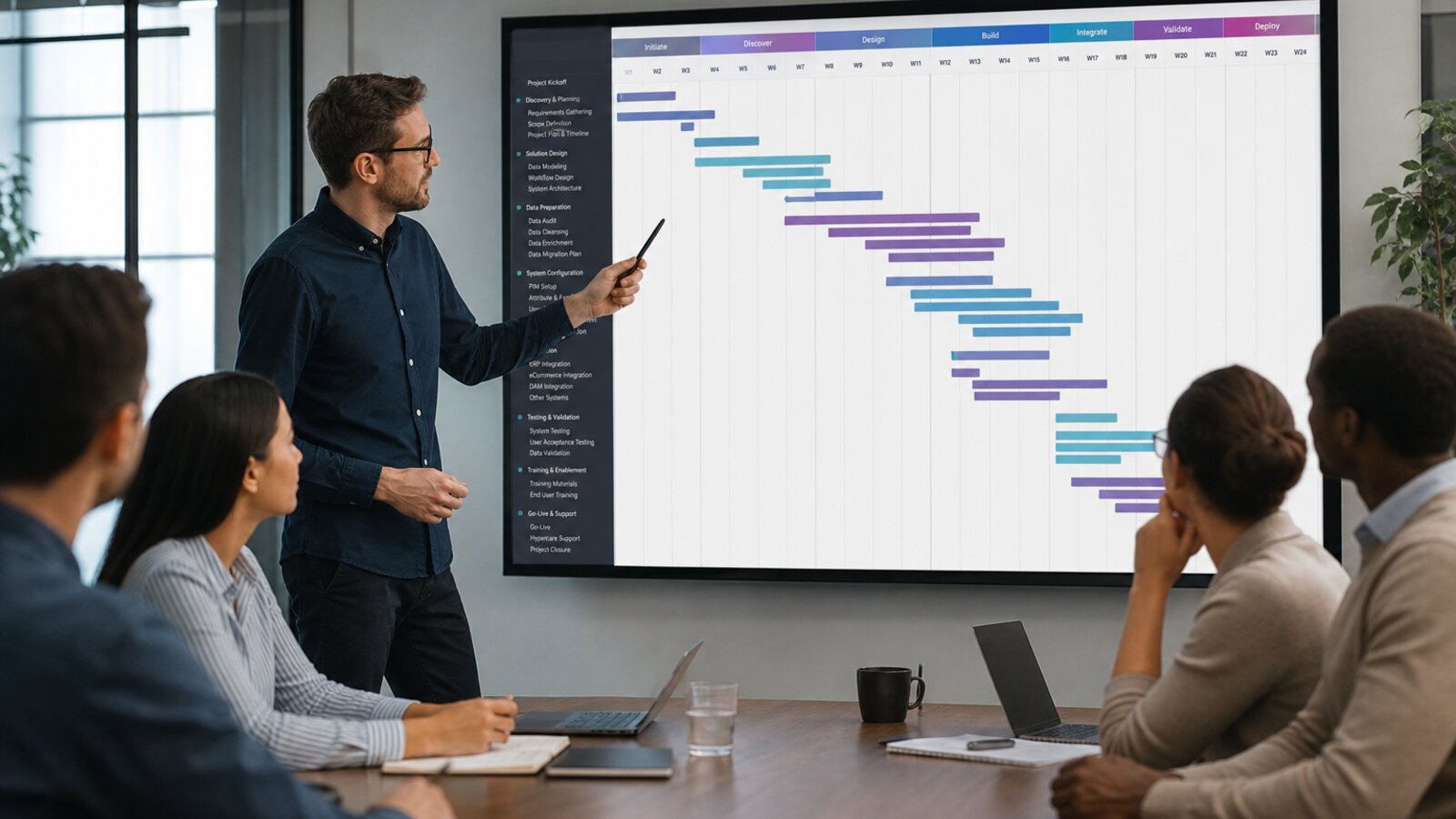


Akeneo product modeling is the difference between a PIM that feels natural and one that fights every launch. Families, attributes, product models, variants, categories, associations, and assets must reflect merchandising reality. This guide shares modeling practices Spygar uses to keep catalogs coherent as SKU counts and channels grow.
If the model is wrong, every import, UI, and channel feed will argue with you forever.
Families and attributes with intent
A family is a product type contract: which attributes exist, which are required, and how variants behave. Resist creating a new family for every minor marketing difference. Prefer shared attributes with clear groups. Mark localizable and scopable attributes deliberately—SEO titles may be locale-specific; technical specs may be global; some claims may be channel-specific.
- Name attribute codes for longevity, not for one project’s slang
- Use the right attribute type (option, metric, text, image, boolean)
- Avoid free-text where filters and compliance need controlled values
- Document ownership of each attribute group
Product models and variants
Common variant axes include color/size for apparel or capacity/color for devices. Put common attributes at the model level and variant-specific attributes at the variant level. Wrong axis choices create either explosion of near-duplicate products or storefronts that cannot present options correctly. Prototype with real PDPs before freezing the model.
Categories, associations, and navigation
Categories support browsing and sometimes channel taxonomy mapping. Associations encode commercial relationships—cross-sell, upsell, substitutes, kits. Keep category strategy separate from attribute strategy: do not bury filterable facts only in category paths if channels need structured attributes.
Assets and media roles
Define media roles per family: primary image, gallery, lifestyle, video, size guide, datasheet. Completeness should include media expectations. A text-complete product with no hero image is not sellable. Align naming conventions and DAM/Akeneo asset links so exports remain deterministic.
Completeness as an operating system
Completeness is not a vanity percentage. Configure requirements that match channel readiness. Use it to prioritize enrichment queues and to block unsafe publishes. Different channels can demand different thresholds—your POS description needs less than your marketplace listing.
Modeling for change
Catalogs evolve. Plan for attribute deprecation, family splits/merges, and new locales. Keep a change log. Test model changes against imports and connectors. The cheapest modeling time is before go-live; the most expensive is after five channels depend on a bad axis.
Spygar modeling workshops
We facilitate Akeneo product modeling workshops with merchandising, SEO, compliance, and engineering in the same room. The output is a living model—families, completeness, and channel mappings—ready for implementation, not a slide deck that dies in email.